I was unsure at first how to approach the task of the pilot observation. My inquiry is about the creative and lifestyle implications of being a polymath, and there did not seem an immediately obvious 'event' to observe. For example, sitting and watching someone write, or paint, would probably not provide me with any information that relevant to my inquiry.
I decided to attend a rehearsal of a friend, who is currently both acting in and producing a play. I had to be very aware that I was sitting in on what is usually a very closed and private process, so I did not want to do anything distracting, such as videotaping or recording. I introduced myself at the beginning of the session, and explained the purpose of my presence, to put the company at ease, and positioned myself in a spot where I would be out of the actor's eye-line so as not to distract. At the beginning of the session, I made a few notes, but quickly realised this was a mistake, as I was horribly aware of the scratching of my pencil; the actors were beginning to nervously glance over as though I were critiquing their performance. This was a good lesson to learn, and I decided instead to reflect on and analyse the session afterwards.
In other circumstances, I would certainly have planned my observation more thoroughly, and used quantitative methods, such as counting the amount of times certain things happened etc. However, I felt a more open process would be more appropriate. My aim was to neutrally observe, and look out for any signs of how my friend's dual roles as actor and producer influenced the rehearsal. I suppose you could say that my focus was clear, but my data collection method was consciously unstructured, as I did not know what to expect.
I remained with the company for the whole afternoon, and although it was an interesting rehearsal, I found myself with little to report on the subject of polymathy. However, there were 2 instances when my friend had to excuse herself to speak on her phone regarding production issues. This, I interpreted as a clear sign of her 'polymathy' having a negative impact, and I sensed through their body language, the disapproval and frustration of the other actors. Reflecting on this later, I realised I could not have accessed this information through any other tool than observation (when interviewed, she may not have mentioned the incident, and would also not have been aware of her colleagues reaction when she left the room). In this respect, I could see the clear benefits of observation as a reliable tool....'actions speak louder than words' perhaps?
This led me to the conclusion that I should definitely try to include some observation in my research design, but I would have to think very carefully about exactly how. It would be very time-consuming to sit in rehearsals all day, with no guarantee of collecting much useful data. I began to think about the more long term participant observation approach; the pilot observation reminded me of lots of other conversations and rehearsals, which have revolved around a practitioner's difficulty to 'juggle' and do more than one thing. In fact, these conversations crop up almost daily in my professional network.
I think the most useful form of observation for me, will be a constant process of noticing, recording and analysing these events in my daily practice. I envisage that keeping a journal for this specific purpose will be the best way to record my findings; this will also help me to maintain reliability of data, as I will be recording my observations as I go, rather than attempting to remember things at a much later date. I recognise that my 'insider knowledge' gives me a distinctive position as a researcher (Costley et al. 2010) and I see this as a positive thing; I am able to interprete information as someone who has experience of the industry I am researching. However, I am equally aware that I must acknowledge my position as an insider, and try to maintain objectivity as much as possible.
References
Costley, Carol, Wlliot, Geoffrey Gibbs, Paul (2010) Doing Work Based Research: Approaches to Enquiry for Insider-Researcher, London: Sage Publications Ltd.
Wednesday, 30 November 2011

Monday, 28 November 2011
Pilot Survey - for actors...
Here is the link to my survey monkey questionnaire - it's intended for actors so perhaps not relevant to that many BAPPers, but if that's you then please take a moment to fill it in! I have also used e-mail as a way to get this around my professional network to try and ensure a good response rate.
http://www.surveymonkey.com/s/HRMKH9Q
Whilst creating the questionnaire I tried to make the questions as clear as possible. Although I am not sure whether I will use a quantitative approach next term, I believe that one of the main benefits of a survey is being able to collect and organise the data efficiently, and form meaningful numerical results. As such, I decided to stick to multiple choice questions, so that the data can be easily used for graphs, pie-charts etc. My thinking behind this is that the survey might give me an idea of what is happening, and then I could go on to use qualitative methods, such as interviews, to explore why it is happening. So essentially in my research design, the survey would most likely come first.
I will analyse my data and conduct my review of the survey as a research tool once of have received a response. I'd appreciate any feedback, even if you're not an actor, take a look. Are the questions clear? Is it user friendly? Any suggestions are welcome...
http://www.surveymonkey.com/s/HRMKH9Q
Whilst creating the questionnaire I tried to make the questions as clear as possible. Although I am not sure whether I will use a quantitative approach next term, I believe that one of the main benefits of a survey is being able to collect and organise the data efficiently, and form meaningful numerical results. As such, I decided to stick to multiple choice questions, so that the data can be easily used for graphs, pie-charts etc. My thinking behind this is that the survey might give me an idea of what is happening, and then I could go on to use qualitative methods, such as interviews, to explore why it is happening. So essentially in my research design, the survey would most likely come first.
I will analyse my data and conduct my review of the survey as a research tool once of have received a response. I'd appreciate any feedback, even if you're not an actor, take a look. Are the questions clear? Is it user friendly? Any suggestions are welcome...
Sunday, 27 November 2011
Pilot Interview
I chose to conduct my pilot interview with a friend of mine, who is a creative polymath (they act and also write). I wanted to interview them about what they do, why and when they made this choice, and what the effects are (both positive and negative) on their professional practice. The interview took place in a quiet cafe, which I chose as it was neutral ground and convenient for my interviewee to travel to. After studying research ethics, I believe I have a duty to my participants to interfere as little as possible with their existing commitments, and as such I also chose to limit the interview time to 1 hour, which was discussed and agreed in advance. I recorded the interview on a dictaphone, so as to give my participant my full attention, and avoid incomplete or illegible notes.
I had already discussed the interview with my participant, but in the interest of professionalism and clarification, I sent them the information below by e-mail beforehand, which acted as a covering information sheet. I of course, made sure they were aware of the meaning of 'polymath', and chose to keep the information as broad as possible, to avoid influencing them in any way:
I chose a semi-structured approach as I wanted to ensure that we covered all the topics, whilst still allowing flexibility and detailed discussion. The questions were designed to be open, so as to maximise the opportunity for my interviewee to go into depth and express them self. I did not anticipate that there would be any benefit in asking closed questions, as I understand one of the main benefits of interviews to be that they give the researcher not just the opportunity to find out the facts, but to ask 'why?'.
As suggested in the reader, the process of transcribing and then analysing the data did take a long time, but I had a wealth of information and felt I had a very good sense of the interviewee's opinions. Without data from other subjects to compare it with, it would be difficult to produce any meaningful analysis of my findings, so I don't imagine I would ever carry out only one interview in isolation. When conducting my actual inquiry with more interviews, I will need to think carefully about the best way to organise and present my findings - for example, whether it's more useful to sort information thematically, or by sub-group (eg. polymath/non-polymath).
I anticipate that interviews will be my primary research tool whilst carrying out my professional inquiry. I have already established that a qualitative approach is what is needed to explore my subject in the necessary depth, and interviews provide a unique insight into the motivations and experiences of individuals. I am going to have to manage my time carefully, and be realistic about how time-consuming the interviews will be, but if I am to collect meaningful data, I think it's a process I must go through.
References
Middlesex University (2011) Reader 6: Tools of Professional Inquiry
I had already discussed the interview with my participant, but in the interest of professionalism and clarification, I sent them the information below by e-mail beforehand, which acted as a covering information sheet. I of course, made sure they were aware of the meaning of 'polymath', and chose to keep the information as broad as possible, to avoid influencing them in any way:
".....As discussed on the phone, I am writing to confirm our interview appointment at 11:00am on the 25th November, 2011. The interview will last 1 hour and refreshments will be provided by me. With your consent, I plan to record the session on a dictaphone; this recording is purely for my own purposes and will not be passed on to any third parties. The purpose of the interview is to gather information and opinion on your lifestyle as a creative polymath. The information that I collect will form part of a professional inquiry I am undertaking, in association with Middlesex University Institute for Work Based Learning. Thank-you for offering your time - please do give me a call if you find that you are unable to make it...." (Thomas, 2011)I looked at some of my BAPP peers' blogs to see what their experiences had been, and realised that I was likely to face the same issue as Natalie Less, who found that at times it was difficult to maintain professionalism whilst interviewing a friend. I am self employed, but in a similar way to an insider-researcher in an organisation, I realised that I must be careful to conduct myself professionally and not allow my existing relationship to bias the results. I believe I managed to achieve this, but it took some effort as my interview subject, at ease in our relationship, kept attempting to turn the tables and ask me questions! I don't want to let this stop me using friends, as I'd be foolish not to utilise my existing network which is rich with contacts, but it's something to be aware of.
I chose a semi-structured approach as I wanted to ensure that we covered all the topics, whilst still allowing flexibility and detailed discussion. The questions were designed to be open, so as to maximise the opportunity for my interviewee to go into depth and express them self. I did not anticipate that there would be any benefit in asking closed questions, as I understand one of the main benefits of interviews to be that they give the researcher not just the opportunity to find out the facts, but to ask 'why?'.
As suggested in the reader, the process of transcribing and then analysing the data did take a long time, but I had a wealth of information and felt I had a very good sense of the interviewee's opinions. Without data from other subjects to compare it with, it would be difficult to produce any meaningful analysis of my findings, so I don't imagine I would ever carry out only one interview in isolation. When conducting my actual inquiry with more interviews, I will need to think carefully about the best way to organise and present my findings - for example, whether it's more useful to sort information thematically, or by sub-group (eg. polymath/non-polymath).
I anticipate that interviews will be my primary research tool whilst carrying out my professional inquiry. I have already established that a qualitative approach is what is needed to explore my subject in the necessary depth, and interviews provide a unique insight into the motivations and experiences of individuals. I am going to have to manage my time carefully, and be realistic about how time-consuming the interviews will be, but if I am to collect meaningful data, I think it's a process I must go through.
References
Middlesex University (2011) Reader 6: Tools of Professional Inquiry
Pilot Focus Group
Last week I carried out a pilot focus group, made up of 5 actors. Some of them just act, and some of them do other things such as writing or directing. As my inquiry topic is 'creative polymathy', the subject of the focus group was 'What do you do when you are not acting?' - although not the precise question I want to explore next term, I felt that this discussion would give me an insight into why people make choices to pursue/avoid other creative pursuits.
Before I undertook this task, I read some blog posts from previous students, and I took note of Mark Iles' comments wishing he had perhaps taken a more structured approach to his questions. So, although I wanted to allow conversation and debate to flow naturally, I had a set of 5 questions as a framework to keep them session relevant and on track. These questions related to what the participants do when they are not acting, why they make these choices, and what fulfillment or satisfaction they get out of them. I chose to record the session, so that I was not distracted by making notes, and could take a more active role in facilitating.
I aimed to stay objective and not influence the debate too much, as I believe a researcher needs to remain neutral in order to collect reliable and valid data. At times I found myself tempted to offer my own views and persuade participants of my opinion, but I managed to avoid it by reminding myself how important it was not to. In their book 'How to Research' (2011), Blaxter et. al warn that reliability depends on consistency; should another researcher have been chairing the focus group, they should essentially have come up with the same results.
I encountered some similar problems to Cerys Dixie, in that I had some pretty strong personalities who tended to dominate the discussion. I did, of course, try to manage this situation, but I was nevertheless left with a sense that some of the participants would have spoken more honestly and thoroughly had they been alone in an interview scenario. However, I could also see that there was a benefit in the interactive nature of the session; the participants sparked off ideas amongst themselves and perhaps as a result went into more detail that they otherwise would have.
One of the most interesting and unexpected things that happened during the pilot, occurred when I gave the group a written piece of information to look at. I had no idea that one of my participants was dyslexic and therefore unable to easily read the information. This was something I had not considered, and I immediately realised that this meant I had potentially got myself into a tricky ethical situation. On this occasion it wasn't a problem, but it highlighted my friend's difficulty in a way that she may not have wanted. I also had to consider that she may have chosen not to speak up about it, and therefore the results would have been invalid, as she would not have had the opportunity to access the information. I'm glad this happened, as I now realise the potential for this to be a problem. In future I would perhaps design a form in advance, asking participants whether they have any special needs or requirements. This would of course be voluntary and confidential. Recently, whilst doing some further reading, I came to realise that one of the main benefits of focus groups as a method is that they do not discriminate against those who cannot read or write (Kitzinger, 1995); on reflection, I now believe it would have been better not to include any written aspect at all.
I did not have a 'gatekeeper' present; as all of the participants work on a freelance basis, there did not seem an obvious authority figure to allocate this role to. With only 5 people in the group, I didn't feel that this was a problem, although perhaps if there were more participants to manage, or certainly if minors were going to be involved, then I would have made this a priority.
Whilst analysing my data, I found the task of listening to the audio and noting down the different voices slightly tricky. I had noticed in the reader that researchers can come across problems distinguishing between voices, and may choose to have each participant announce themselves before speaking. I did not request this, as I felt it would interrupt the flow of conversation, and I was confident that the participants voices were significantly different. I found the problem lay more in finding an easy way to format the data - should I make my notes according to the speaker, or the topic being discussed? The complexity of recording/analysing multiple voices means the researcher must take extra care not to quote people out of context.
After reviewing the pros and cons of this research tool, it is not my intention to include it in my research design. I certainly believe that focus groups can provide a useful platform for discussion, but in my case I think I will gain more from one-on-one interviews. I will then be confident that my subjects views are not influenced by others, and therefore ultimately more reliable.
References
Blaxter, L., Hughes, C. & Tight, M., (2001) How to Research (2nd edition), Milton Keynes: Open University Press
Kitzinger, J (1995) Qualitative Research; Introducing Focus Groups, BMJ Available at: http://www.bmj.com/content/311/7000/299.full (accessed 26/11/2011)
Middlesex University (2011) Reader 6: Tools of Professional Inquiry
Before I undertook this task, I read some blog posts from previous students, and I took note of Mark Iles' comments wishing he had perhaps taken a more structured approach to his questions. So, although I wanted to allow conversation and debate to flow naturally, I had a set of 5 questions as a framework to keep them session relevant and on track. These questions related to what the participants do when they are not acting, why they make these choices, and what fulfillment or satisfaction they get out of them. I chose to record the session, so that I was not distracted by making notes, and could take a more active role in facilitating.
I aimed to stay objective and not influence the debate too much, as I believe a researcher needs to remain neutral in order to collect reliable and valid data. At times I found myself tempted to offer my own views and persuade participants of my opinion, but I managed to avoid it by reminding myself how important it was not to. In their book 'How to Research' (2011), Blaxter et. al warn that reliability depends on consistency; should another researcher have been chairing the focus group, they should essentially have come up with the same results.
I encountered some similar problems to Cerys Dixie, in that I had some pretty strong personalities who tended to dominate the discussion. I did, of course, try to manage this situation, but I was nevertheless left with a sense that some of the participants would have spoken more honestly and thoroughly had they been alone in an interview scenario. However, I could also see that there was a benefit in the interactive nature of the session; the participants sparked off ideas amongst themselves and perhaps as a result went into more detail that they otherwise would have.
One of the most interesting and unexpected things that happened during the pilot, occurred when I gave the group a written piece of information to look at. I had no idea that one of my participants was dyslexic and therefore unable to easily read the information. This was something I had not considered, and I immediately realised that this meant I had potentially got myself into a tricky ethical situation. On this occasion it wasn't a problem, but it highlighted my friend's difficulty in a way that she may not have wanted. I also had to consider that she may have chosen not to speak up about it, and therefore the results would have been invalid, as she would not have had the opportunity to access the information. I'm glad this happened, as I now realise the potential for this to be a problem. In future I would perhaps design a form in advance, asking participants whether they have any special needs or requirements. This would of course be voluntary and confidential. Recently, whilst doing some further reading, I came to realise that one of the main benefits of focus groups as a method is that they do not discriminate against those who cannot read or write (Kitzinger, 1995); on reflection, I now believe it would have been better not to include any written aspect at all.
I did not have a 'gatekeeper' present; as all of the participants work on a freelance basis, there did not seem an obvious authority figure to allocate this role to. With only 5 people in the group, I didn't feel that this was a problem, although perhaps if there were more participants to manage, or certainly if minors were going to be involved, then I would have made this a priority.
Whilst analysing my data, I found the task of listening to the audio and noting down the different voices slightly tricky. I had noticed in the reader that researchers can come across problems distinguishing between voices, and may choose to have each participant announce themselves before speaking. I did not request this, as I felt it would interrupt the flow of conversation, and I was confident that the participants voices were significantly different. I found the problem lay more in finding an easy way to format the data - should I make my notes according to the speaker, or the topic being discussed? The complexity of recording/analysing multiple voices means the researcher must take extra care not to quote people out of context.
After reviewing the pros and cons of this research tool, it is not my intention to include it in my research design. I certainly believe that focus groups can provide a useful platform for discussion, but in my case I think I will gain more from one-on-one interviews. I will then be confident that my subjects views are not influenced by others, and therefore ultimately more reliable.
References
Blaxter, L., Hughes, C. & Tight, M., (2001) How to Research (2nd edition), Milton Keynes: Open University Press
Kitzinger, J (1995) Qualitative Research; Introducing Focus Groups, BMJ Available at: http://www.bmj.com/content/311/7000/299.full (accessed 26/11/2011)
Middlesex University (2011) Reader 6: Tools of Professional Inquiry
Saturday, 26 November 2011
Ethics - Task 5b
A little while ago, I compiled my own 'code of practice', based on the theatre where I currently work. I have now consulted the official code of practice issued by the theatre, to see how my ideas compared. Below is my list of rules, made without reference to any documentation:
I discovered that broadly speaking, my ideas were along the right lines. All the 'rules' I laid out were indeed true, and pretty standard for a theatre. There were a few things I missed out, such as 'no pets backstage' or 'no visitors backstage after the half', but nothing revelatory.
I realised that other than the obvious health and safety issues, the rules that are in place are there to ensure the work in the building can be done as efficiently as possible, without conflict or distraction. I generally find in the creative industries that people are quite liberal and tolerant of others, so I would hope that basic ethics do not need to be forced upon people.
During my inquiry though, I accept and appreciate that I have a responsibility to my academic institution, and of course all those taking part, to protect them and ensure ethical issues have been planned for and addressed.
CODE OF PRACTICE
- Visitors must report to security to sign in
- Staff must be able to present their ID cards at all times
- Staff should arrive punctually
- No eating or drinking on stage
- Leave rehearsal spaces/dressing rooms in a fit state for others
- No alcohol whilst you are working
- Alcohol must only be consumed in the bar area
- No substance misuse at any time
- Smoking is only permitted on the outside balcony
- No costumes to be worn in the canteen or green room
- No eating or smoking in costume
- Staff must adhere to the buildings equality policies
- Staff should be aware and respectful of when others are holding
meetings, auditions, rehearsals etc.
- Actors must sign in for performances and are not permitted
to leave the building after the half hour call.
- Sickness must be reported as early as possible to your stage manager.
- Actors must be in the UK 24 at least 24 hours prior to a performance
I discovered that broadly speaking, my ideas were along the right lines. All the 'rules' I laid out were indeed true, and pretty standard for a theatre. There were a few things I missed out, such as 'no pets backstage' or 'no visitors backstage after the half', but nothing revelatory.
I realised that other than the obvious health and safety issues, the rules that are in place are there to ensure the work in the building can be done as efficiently as possible, without conflict or distraction. I generally find in the creative industries that people are quite liberal and tolerant of others, so I would hope that basic ethics do not need to be forced upon people.
During my inquiry though, I accept and appreciate that I have a responsibility to my academic institution, and of course all those taking part, to protect them and ensure ethical issues have been planned for and addressed.
Sunday, 20 November 2011
SIG update
So...since facebook took the decision to remove discussion boards (and with it all our precious threads of conversations) I have decided to try and have a bit of a recap on the discussions I was involved..
The SIG I started was simply called 'Theatre, tv and film' and I began by talking about the play I was currently in and other shows I had enjoyed. Several people commented and I began quite an in-depth discussion with Laura about the challenges of getting work, particularly for 'foreign' performers. We talked about Laura's return to performing in the UK and what her plan of action could be for getting going again performing in this country. Several inquiry questions were proposed and discussed that might help her to achieve this.
After considering and receiving feedback on several potential topics, I discussed my proposed inquiry topic of 'polymathy' and the challenges of finding literature relating to this subject. Through interaction with my SIG, I was able to reassure myself and talk through some of these worries, as well as finalising the phrasing of my question. We shared some thoughts on polymathy and why it's something I am interested in pursuing.
I also used the SIG as a way of developing my award title, which over time I decided to change and simplify, based on feedback from others.
Amongst the other SIG conversations, I talked with Daisuke and Mina about 'how to be better at what we do' and we discussed the importance of being aware and recording our problems and processes. I also got involved in a discussion with Mina about what makes a great choreographer, and I gave my opinion as a non-dancer based on movement directors I have worked with in theatre. Many of the dancers in the group were developing ideas about how important official qualifications are for a dance teacher, and there was quite a lively debate discussing the pros and cons. I offered my opinion that creative teaching should be based on experience and excellence in that field, but also accepted that I can understand why parents and schools seek a recognisable qualification.
This is just a snippet of the conversations that went on - please leave comments so that we can all help each other to remember some of the best points that were raised through the facebook SIGs....
The SIG I started was simply called 'Theatre, tv and film' and I began by talking about the play I was currently in and other shows I had enjoyed. Several people commented and I began quite an in-depth discussion with Laura about the challenges of getting work, particularly for 'foreign' performers. We talked about Laura's return to performing in the UK and what her plan of action could be for getting going again performing in this country. Several inquiry questions were proposed and discussed that might help her to achieve this.
After considering and receiving feedback on several potential topics, I discussed my proposed inquiry topic of 'polymathy' and the challenges of finding literature relating to this subject. Through interaction with my SIG, I was able to reassure myself and talk through some of these worries, as well as finalising the phrasing of my question. We shared some thoughts on polymathy and why it's something I am interested in pursuing.
I also used the SIG as a way of developing my award title, which over time I decided to change and simplify, based on feedback from others.
Amongst the other SIG conversations, I talked with Daisuke and Mina about 'how to be better at what we do' and we discussed the importance of being aware and recording our problems and processes. I also got involved in a discussion with Mina about what makes a great choreographer, and I gave my opinion as a non-dancer based on movement directors I have worked with in theatre. Many of the dancers in the group were developing ideas about how important official qualifications are for a dance teacher, and there was quite a lively debate discussing the pros and cons. I offered my opinion that creative teaching should be based on experience and excellence in that field, but also accepted that I can understand why parents and schools seek a recognisable qualification.
This is just a snippet of the conversations that went on - please leave comments so that we can all help each other to remember some of the best points that were raised through the facebook SIGs....
Tuesday, 15 November 2011
What happened to the BAPP Facebook discussion board?
Has anyone else noticed that all of the SIGs from the BAPP facebook discussion pages seem to have disappeared? It seems that someone has deleted them or something. Such a shame as there were some really interesting conversations going on that we now have no record of. I also wonder how this might effect our work, as we will now have no evidence of interaction with SIGs when it comes to creating our portfolio at the end of the module....looking at the module handbook it seems this is pretty essential to get a good grade. Oh dear, what shall we do?
I'd be really grateful if anyone can shed any light on this. I am crossing my fingers it's just something I am doing wrong and they are really still there...
I'd be really grateful if anyone can shed any light on this. I am crossing my fingers it's just something I am doing wrong and they are really still there...
Saturday, 12 November 2011
Ethics in Current affairs
Ethical questions are raised everyday in our working lives and in the news; some recent examples that spring to mind are the debate around assisted suicide at clinics such as 'Dignitas' in Switzerland, and the recent case in China of an injured toddler being ignored and left to die by multiple passers by (see below for relevant articles). Both have sparked enormous debate and forced society to question it's guiding principals and moral integrity.
http://www.guardian.co.uk/society/2010/feb/25/assisted-suicide-guidelines-dignitas-widower
http://www.telegraph.co.uk/news/worldnews/asia/china/8830790/Chinese-toddler-run-over-twice-after-being-left-on-street.html
The incident in China particularly, demonstrated to me that no matter how advanced, prosperous and civilised a society, it is the personal ethics of the individual that count the most. The way we conduct ourselves as an individual filters through into our working lives and therefore impacts on larger society.
Has anyone come across anything in the news, or their own working lives recently that has thrown up an ethical dilemma?
References
Booth, R (2010) Article: Dignitas Widower says assisted suicide guidelines avoid a debate people want. Accessed 1st Nov 2011 at: http://www.guardian.co.uk/society/2010/feb/25/assisted-suicide-guidelines-dignitas-widower
Foster, P (2011) Article: Chinese toddler run over twice after being left on Street. Accessed 1st Nov at: http://www.telegraph.co.uk/news/worldnews/asia/china/8830790/Chinese-toddler-run-over-twice-after-being-left-on-street.html
http://www.guardian.co.uk/society/2010/feb/25/assisted-suicide-guidelines-dignitas-widower
http://www.telegraph.co.uk/news/worldnews/asia/china/8830790/Chinese-toddler-run-over-twice-after-being-left-on-street.html
The incident in China particularly, demonstrated to me that no matter how advanced, prosperous and civilised a society, it is the personal ethics of the individual that count the most. The way we conduct ourselves as an individual filters through into our working lives and therefore impacts on larger society.
Has anyone come across anything in the news, or their own working lives recently that has thrown up an ethical dilemma?
References
Booth, R (2010) Article: Dignitas Widower says assisted suicide guidelines avoid a debate people want. Accessed 1st Nov 2011 at: http://www.guardian.co.uk/society/2010/feb/25/assisted-suicide-guidelines-dignitas-widower
Foster, P (2011) Article: Chinese toddler run over twice after being left on Street. Accessed 1st Nov at: http://www.telegraph.co.uk/news/worldnews/asia/china/8830790/Chinese-toddler-run-over-twice-after-being-left-on-street.html
Thursday, 3 November 2011
Moving towards a final question - thoughts please!
I think I have arrived at my final question! (Although I am very much still open to suggestions). Looking back to last term and the inquiry task, something that I identified was an interest in people who create their own work. I have always admired these people who are not afraid to multi-task, and I often wonder if I would be more fulfilled if I had other creative pursuits to work on when I am not acting. This term I developed that interest further by looking at all kinds of polymaths (people who do more than one thing)...I have chatted to actors who write, teachers who direct, actors who do photography, even actors who run their own clothing business or catering companies! I became more and more interested in what drives these individuals, and whether this type of career route might be right for me.
I took multiple questions to my BAPP peers and wider professional community for feedback. Looking back at the process of developing my questions, I realised that after my first meeting with another practitioner, I was extremely enthused and inspired by their comments. However, I began to feel I was at risk of being too influenced by them...after all, that was only one person's opinion. As I took my questions out to other practitioners, I was aware that I must keep an open mind and continue to seek advice from other professionals.
I tried not to be swayed into a pressure of settling on one question too quickly - I believe that to get the most out of this inquiry it's worth taking the time to get the question just right.

As I went through the process, I tried to reflect in my journal and articulate my thoughts on my developing areas of interest. Here's a little insight....
So...this is the question as it stands at the moment. Please feel free to offer constructive criticism, there is still time for me to make changes! I am not sure about using the word 'creative' twice, for example. What is what to know is: Is the question easy to understand? Is the phrasing to clumsy/restrictive/broad? These kind of comments would be very helpful....
I took multiple questions to my BAPP peers and wider professional community for feedback. Looking back at the process of developing my questions, I realised that after my first meeting with another practitioner, I was extremely enthused and inspired by their comments. However, I began to feel I was at risk of being too influenced by them...after all, that was only one person's opinion. As I took my questions out to other practitioners, I was aware that I must keep an open mind and continue to seek advice from other professionals.
I tried not to be swayed into a pressure of settling on one question too quickly - I believe that to get the most out of this inquiry it's worth taking the time to get the question just right.
As I went through the process, I tried to reflect in my journal and articulate my thoughts on my developing areas of interest. Here's a little insight....
"Why do I enjoy acting? Why was I drawn to acting in the first place? Probably because I enjoy and have an urge to tell stories...to enter a make-believe world. This is essentially what anyone working in theatre or film is doing, although each person plays a different role in bringing that story to life. I suppose my frustration with the acting profession is that as soon as we are out of work, we can no longer tell stories, we are always at the mercy of someone else to give us a part. I want to explore whether creating stories in different ways (eg. photography, directing short films) will help me to grow and develop as a creative individual." - 6th October 2011The positive responses from other practitioners, as well as my own reflective process, has led be to the believe that the topic I am most keen to explore is 'creative polymathy'. I didn't want to limit my research to actors who produce their own work, so I have tried to phrase a question that covers many areas. However, I will be limiting my research to the creative industries, which are most relevant to me.
So...this is the question as it stands at the moment. Please feel free to offer constructive criticism, there is still time for me to make changes! I am not sure about using the word 'creative' twice, for example. What is what to know is: Is the question easy to understand? Is the phrasing to clumsy/restrictive/broad? These kind of comments would be very helpful....
Creative Polymathy: Is finding multiple forms of expression the key to creative fulfillment and career longevity, or does the creative polymath risk becoming 'the jack of all trades and the master of none?'
Freedom Theatre
I thought this article might be of interest to anyone that is looking at the effect performance can have on society and politics. I know that Sophie Douglas, for example, has been exploring the effect of dance of society.
It's about 'Freedom Theatre', a theatre company in the West Bank bravely continuing to create work, even after their director was shot dead earlier this year. It's an example of how theatre can be a force for real social change and give people a voice who might not otherwise have one. Quite inspiring....
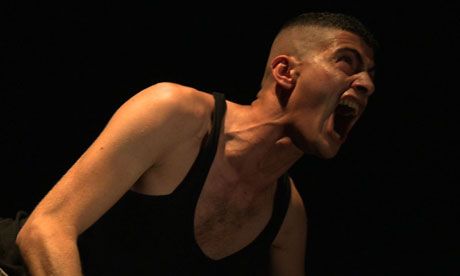
Article by Kate Laycock for The Guardian:
Accessed 3rd November 2011
Photograph copyright: Archive Medico International
It's about 'Freedom Theatre', a theatre company in the West Bank bravely continuing to create work, even after their director was shot dead earlier this year. It's an example of how theatre can be a force for real social change and give people a voice who might not otherwise have one. Quite inspiring....
After the killing of its director, Jenin's Freedom Theatre asks: 'What else?'
Article by Kate Laycock for The Guardian:
Accessed 3rd November 2011
Photograph copyright: Archive Medico International
Wednesday, 2 November 2011
"How Should I Act?" - Exploring Ethics
In our professional lives, we are guided by the ethics and codes of practice of the organisations we work for. However, we all also have a set of evolving personal ethics that act as our 'moral compass'. It is useful to analyse how the two meet, and where there are possible conflicts between personal and professional ethics. To help me to explore and question my ethics and the impact they will have on my research, I have explored some of the ethical frameworks developed by philosophers over the years.
Ancient Ethics
The ancient Greek philosophers explored ethics and morals in great detail, and their thinking still forms the basis of many ethical frameworks today. "How shall I act?", the question from my title, is taken from Sophocles' play Philoctetes; it is the human dilemma which has troubled philosophers since the beginning of civilisation. Socrates ( 469 BC–399 BC) envisioned morality "as a kind of self discovery.....morality isn't just obeying the law, but something much more spiritual" (Robinson & Garrett 2005). Whilst I believe this to be true, Socrates seemed to have a somewhat naive approach, believing that people always mean to act well.
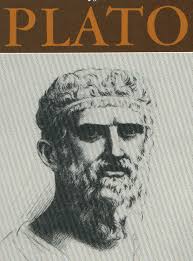
Socrates' student Plato had a different approach and took a less personal stance; in his book The Republic Plato asserted that the 'right' way to act is that which most improves and contributes to the state. He believed in man's search for reason and truth, and questioned whether theatre had any place in helping people achieve this (Ridout 2009). As a performer, I naturally view imagination to be a positive thing, however Plato seemed to regard imagination as an obstacle to the objective of reason.
Later, Plato's student Aristotle took a more positive view of theatre, "proposing that theatre can be good both for the individual and society" (Ridout 2009). In more modern times, it has been widely accepted that theatre can be a platform for ethical debate; In my work last term, I explored Dewey's notion that "interaction with the arts was of value to society, providing an experience that better equipped people to engage with moral & political problems" (Thomas 2011).
This lengthy quote relating to Aristotle's beliefs for me summarises my own ethical stance:
Utilitarianism/Consequentialism
English philosopher Jeremy Bentham (1748-1832) is considered the "modern father of utilitarianism" (Law 2007). In utilitarianism, actions are judged not in themselves, but by their consequences. As such, a morally questionable act, like murder, could be deemed acceptable if it was seen to be for the 'greater good'. In the reader the case of a photojournalist is discussed; he left one child to die in the hope that his image would save thousands of others. The philosophy asserts that the actions which are correct are those which will create the most happiness overall.
The concept of utilitarianism is quite clear, but to me it seems flawed and overly simplistic. I am uneasy about the idea that an 'evil' act could ever be considered acceptable, whatever the circumstances. I believe that humans are conditioned to believe in certain things, like the preservation of life, and that ultimately human beings are unlikely to always be able to stop, think, and take a utilitarian stance, even if they wanted to.
In terms of research, I think it could be very dangerous to adopt this approach. According to utilitarianism, it might be acceptable to break a promise of confidentially, for example, if it was thought that the revealing of confidential information would cause the greatest happiness. To me, this is certainly not acceptable and not a way that I would conduct myself when carrying out research; I want my participants to be able to trust me. However, perhaps there are exceptions. If a person was carrying out research in a hospital or care home, and they uncovered evidence of abuse or neglect, it could be considered ethical to break their code of confidentiality and report their findings to the management or the police. This demonstrates to me that there is a lot of grey area in ethical debate, and a 'one set of rules fits all' approach simply does not work.
 Deontology
'Deon' means 'one must' and deontology is grounded in duty (Law 2007). Actions themselves are judged as right or wrong, and this are 'measured' through the the intentions/motives of the 'doer'. Therefore, the act of killing someone, for example, is not always equal; Deontology might take a very different view on an act of murder committed in cold blood, compared with helping a terminally ill to die.
In contrast with Utilitarianism, it is down to the individual to asses and carry out their 'moral duties; there is no fixed code of practice that applies to all. The idea of deontology seems a sensible one, but can we rely on individuals to decide on, carry out their 'duties'? The Greek philosopher Socrates said that "no one does wrong knowingly" (Robinson & Garrett 2005) but I would argue that this statement is clearly not true; everyday there are people knowingly neglect their duties or committing acts they know to be wrong. I think there is a lot to be gained from assessing our moral duties, and the world would certainly be a happier place if we all did, but does Deontology provide us with much structure?
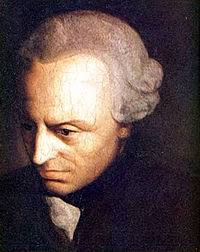 Immanuel Kant (1724-1804), who was loosely considered a deontologist, differed by attempting to offer a structure, claiming that "morality should be a set of rules that are the same for everyone" (Law 2007). Kant's notion was:
Virtue Ethics
'Ethos' is a Greek word meaning character (Middlesex University 2011). Virtue Ethics is concerned with the development of 'good' character traits. In his book Philosophy, Stephen Law explains that there are certain traits are pretty much universally perceived as 'right' or 'good'. For example, "telling the truth expresses honesty" (2007).
However, it strikes me that virtue ethics is highly dependent on the circumstances of the culture and time that we are living in. In some societies, having sex before marriage is considered to be wrong, but in today's secular western world, it is widely felt that it's not important, and that a person can be virtuous, even if they have multiple sexual partners outside of wedlock. Society's list of 'virtuous traits' is not static.
Virtue Ethics could be considered lacking in structure, there are no particular rules to follow or questions to ask. However, I believe that if we question our actions in terms of 'virtues', eg. 'is that just?' or 'would that be kind/generous?' we will come as close as we can to knowing how to choose the 'right' action.
Conclusion
Virtue Ethics and the writings of Aristotle appeal the most to me as ethical arguments. I try to ask myself whether my actions are virtuous, and behave in a way that develops my positive characteristics as a person. This is also the way that I aim to conduct myself as a researcher; I plan to make thorough ethical assessments and to lay out a comprehensive ethical plan before beginning my research. However, I will also be prepared to meet surprising situations and make the 'right' choices under pressure. I am yet to be convinced of a single structure or set of rules that can tell us how to behave ethically; I believe the whole process is less scientific, more spiritual. I draw some parallels with the concept of tacit knowledge that we explored last term, ethics are based on an intuitive sense of 'goodness' that we cannot necessarily articulate.
References
Institute for Work based Learning (2011) Reader 5: Professioal Ethics Middlesex University
Kant, I (1785) Groundwork for the Metaphysics of Morals
Law, S (2007) Philosophy. London: Dorling Kindersley Limited
Robinson, D. (2005) Introducing Ethics. Royston: Icon Books
Ridout, N (2009) Theatre & Ethics. London: Palgrave Macmillan
Thomas, S (2011) A critical reflection on my developing professional practice Middlesex University
Wesker, A (1957) The Kitchen. Oberon Modern Plays
Ancient Ethics
The ancient Greek philosophers explored ethics and morals in great detail, and their thinking still forms the basis of many ethical frameworks today. "How shall I act?", the question from my title, is taken from Sophocles' play Philoctetes; it is the human dilemma which has troubled philosophers since the beginning of civilisation. Socrates ( 469 BC–399 BC) envisioned morality "as a kind of self discovery.....morality isn't just obeying the law, but something much more spiritual" (Robinson & Garrett 2005). Whilst I believe this to be true, Socrates seemed to have a somewhat naive approach, believing that people always mean to act well.
Socrates' student Plato had a different approach and took a less personal stance; in his book The Republic Plato asserted that the 'right' way to act is that which most improves and contributes to the state. He believed in man's search for reason and truth, and questioned whether theatre had any place in helping people achieve this (Ridout 2009). As a performer, I naturally view imagination to be a positive thing, however Plato seemed to regard imagination as an obstacle to the objective of reason.
Later, Plato's student Aristotle took a more positive view of theatre, "proposing that theatre can be good both for the individual and society" (Ridout 2009). In more modern times, it has been widely accepted that theatre can be a platform for ethical debate; In my work last term, I explored Dewey's notion that "interaction with the arts was of value to society, providing an experience that better equipped people to engage with moral & political problems" (Thomas 2011).
This lengthy quote relating to Aristotle's beliefs for me summarises my own ethical stance:
"Ethical understanding is not something which can be taught, for what can be taught is general not particular. Rules and principals will rarely apply in any clear way to real solutions. Instead, moral truth is only acquired through experience...." (Law 2009)The wisdom I take from this is that there cannot be fixed rules for all when it comes to ethics, and that the quest to ' be good' is a process that continues throughout our lives. However, there have been many attempts to create ethical frameworks that adhere to specific rules.
Utilitarianism/Consequentialism
English philosopher Jeremy Bentham (1748-1832) is considered the "modern father of utilitarianism" (Law 2007). In utilitarianism, actions are judged not in themselves, but by their consequences. As such, a morally questionable act, like murder, could be deemed acceptable if it was seen to be for the 'greater good'. In the reader the case of a photojournalist is discussed; he left one child to die in the hope that his image would save thousands of others. The philosophy asserts that the actions which are correct are those which will create the most happiness overall.
The concept of utilitarianism is quite clear, but to me it seems flawed and overly simplistic. I am uneasy about the idea that an 'evil' act could ever be considered acceptable, whatever the circumstances. I believe that humans are conditioned to believe in certain things, like the preservation of life, and that ultimately human beings are unlikely to always be able to stop, think, and take a utilitarian stance, even if they wanted to.
In terms of research, I think it could be very dangerous to adopt this approach. According to utilitarianism, it might be acceptable to break a promise of confidentially, for example, if it was thought that the revealing of confidential information would cause the greatest happiness. To me, this is certainly not acceptable and not a way that I would conduct myself when carrying out research; I want my participants to be able to trust me. However, perhaps there are exceptions. If a person was carrying out research in a hospital or care home, and they uncovered evidence of abuse or neglect, it could be considered ethical to break their code of confidentiality and report their findings to the management or the police. This demonstrates to me that there is a lot of grey area in ethical debate, and a 'one set of rules fits all' approach simply does not work.
'Deon' means 'one must' and deontology is grounded in duty (Law 2007). Actions themselves are judged as right or wrong, and this are 'measured' through the the intentions/motives of the 'doer'. Therefore, the act of killing someone, for example, is not always equal; Deontology might take a very different view on an act of murder committed in cold blood, compared with helping a terminally ill to die.
In contrast with Utilitarianism, it is down to the individual to asses and carry out their 'moral duties; there is no fixed code of practice that applies to all. The idea of deontology seems a sensible one, but can we rely on individuals to decide on, carry out their 'duties'? The Greek philosopher Socrates said that "no one does wrong knowingly" (Robinson & Garrett 2005) but I would argue that this statement is clearly not true; everyday there are people knowingly neglect their duties or committing acts they know to be wrong. I think there is a lot to be gained from assessing our moral duties, and the world would certainly be a happier place if we all did, but does Deontology provide us with much structure?
"Act in accordance with that maxim which can at the same time make itself into a universal law" Kant (1785)By this he meant that we should only carry out an action if, should everyone else in the world do the same, it would still be right. To use an example from 'The Kitchen' (Wesker 1957), the play that I am currently in, there is a scene where a chef steals some meat from the kitchen where he works, and gives it to a tramp in need. This could be perceived as a 'good' act, the chef feels a sense of duty towards the impoverished man. However, if everybody did the same, it would not pass Kant's test; restaurants would go out of business, which would create unemployment and unhappiness for many. So again, I find there are grey areas in Kant's philosophy.
Virtue Ethics
'Ethos' is a Greek word meaning character (Middlesex University 2011). Virtue Ethics is concerned with the development of 'good' character traits. In his book Philosophy, Stephen Law explains that there are certain traits are pretty much universally perceived as 'right' or 'good'. For example, "telling the truth expresses honesty" (2007).
However, it strikes me that virtue ethics is highly dependent on the circumstances of the culture and time that we are living in. In some societies, having sex before marriage is considered to be wrong, but in today's secular western world, it is widely felt that it's not important, and that a person can be virtuous, even if they have multiple sexual partners outside of wedlock. Society's list of 'virtuous traits' is not static.
Virtue Ethics could be considered lacking in structure, there are no particular rules to follow or questions to ask. However, I believe that if we question our actions in terms of 'virtues', eg. 'is that just?' or 'would that be kind/generous?' we will come as close as we can to knowing how to choose the 'right' action.
Conclusion
Virtue Ethics and the writings of Aristotle appeal the most to me as ethical arguments. I try to ask myself whether my actions are virtuous, and behave in a way that develops my positive characteristics as a person. This is also the way that I aim to conduct myself as a researcher; I plan to make thorough ethical assessments and to lay out a comprehensive ethical plan before beginning my research. However, I will also be prepared to meet surprising situations and make the 'right' choices under pressure. I am yet to be convinced of a single structure or set of rules that can tell us how to behave ethically; I believe the whole process is less scientific, more spiritual. I draw some parallels with the concept of tacit knowledge that we explored last term, ethics are based on an intuitive sense of 'goodness' that we cannot necessarily articulate.
References
Institute for Work based Learning (2011) Reader 5: Professioal Ethics Middlesex University
Kant, I (1785) Groundwork for the Metaphysics of Morals
Law, S (2007) Philosophy. London: Dorling Kindersley Limited
Robinson, D. (2005) Introducing Ethics. Royston: Icon Books
Ridout, N (2009) Theatre & Ethics. London: Palgrave Macmillan
Thomas, S (2011) A critical reflection on my developing professional practice Middlesex University
Wesker, A (1957) The Kitchen. Oberon Modern Plays
Subscribe to:
Posts (Atom)